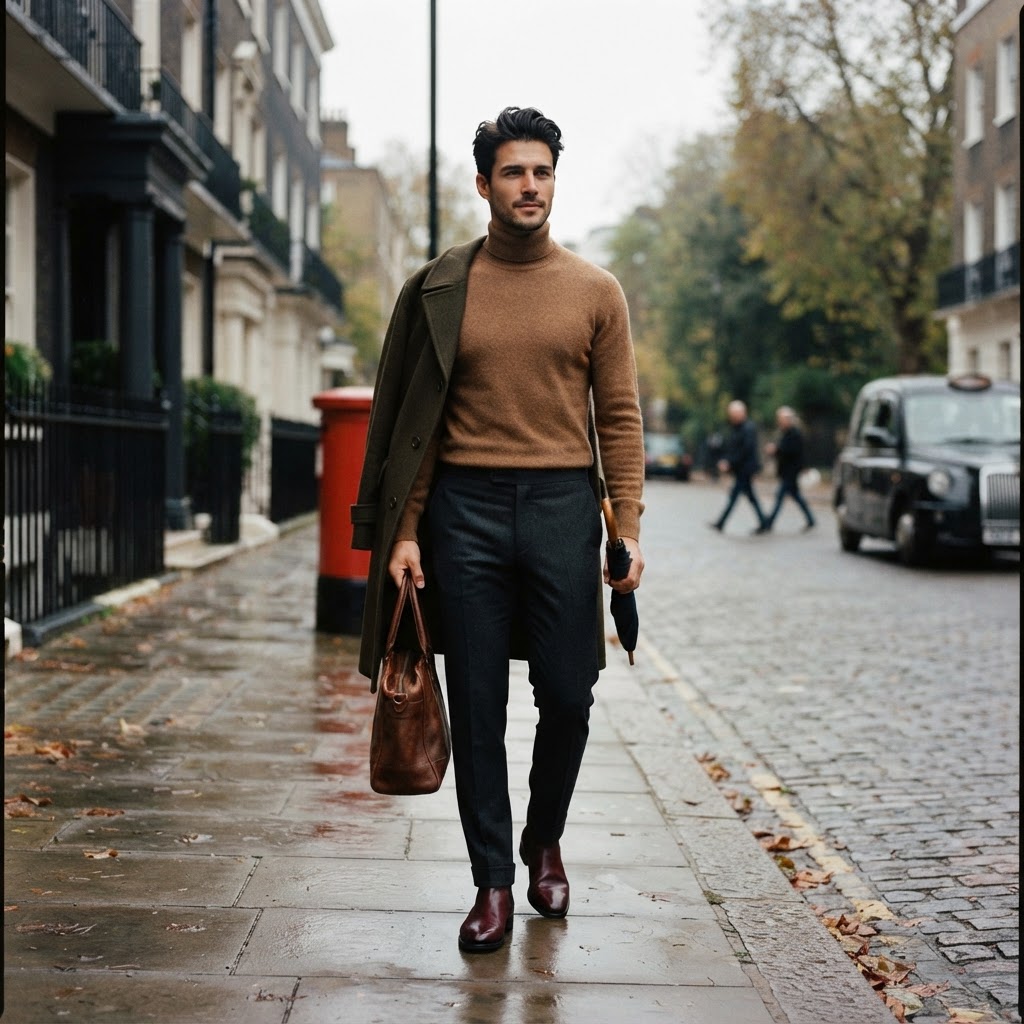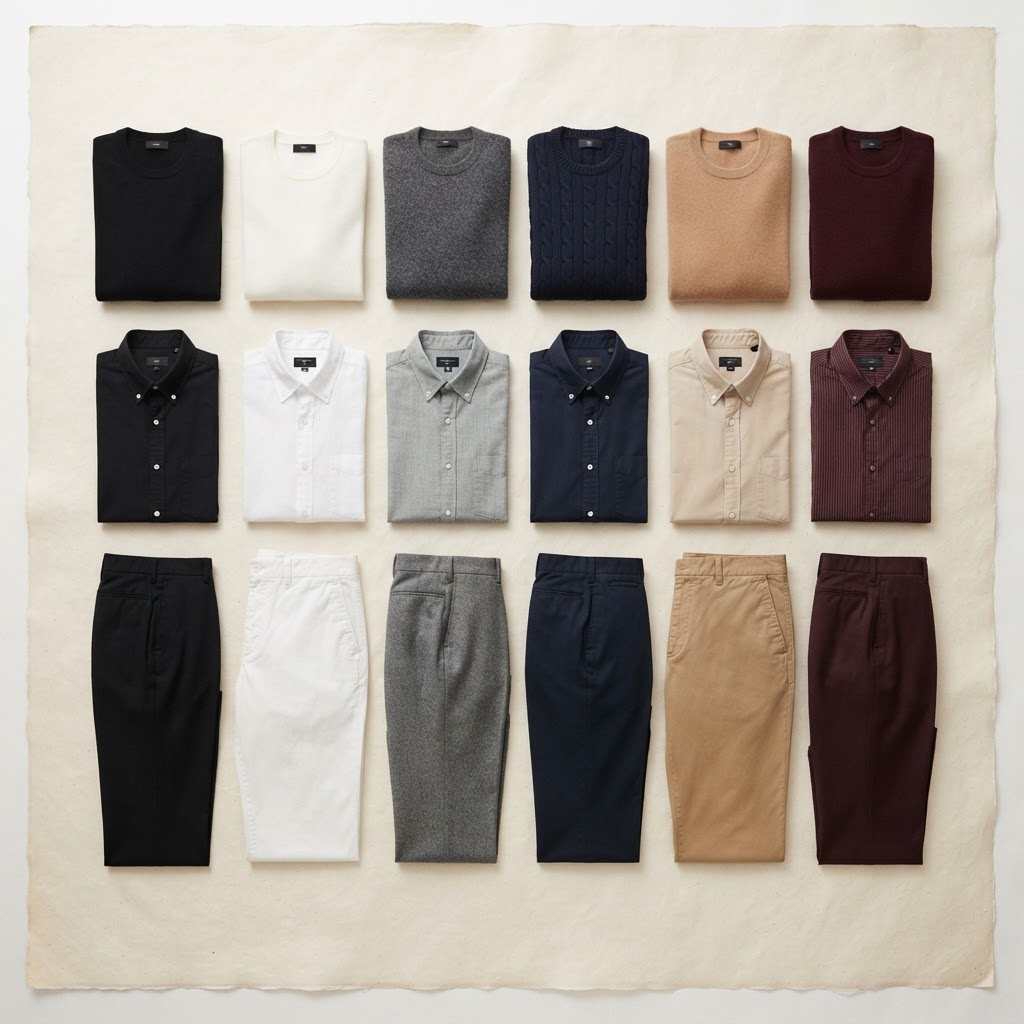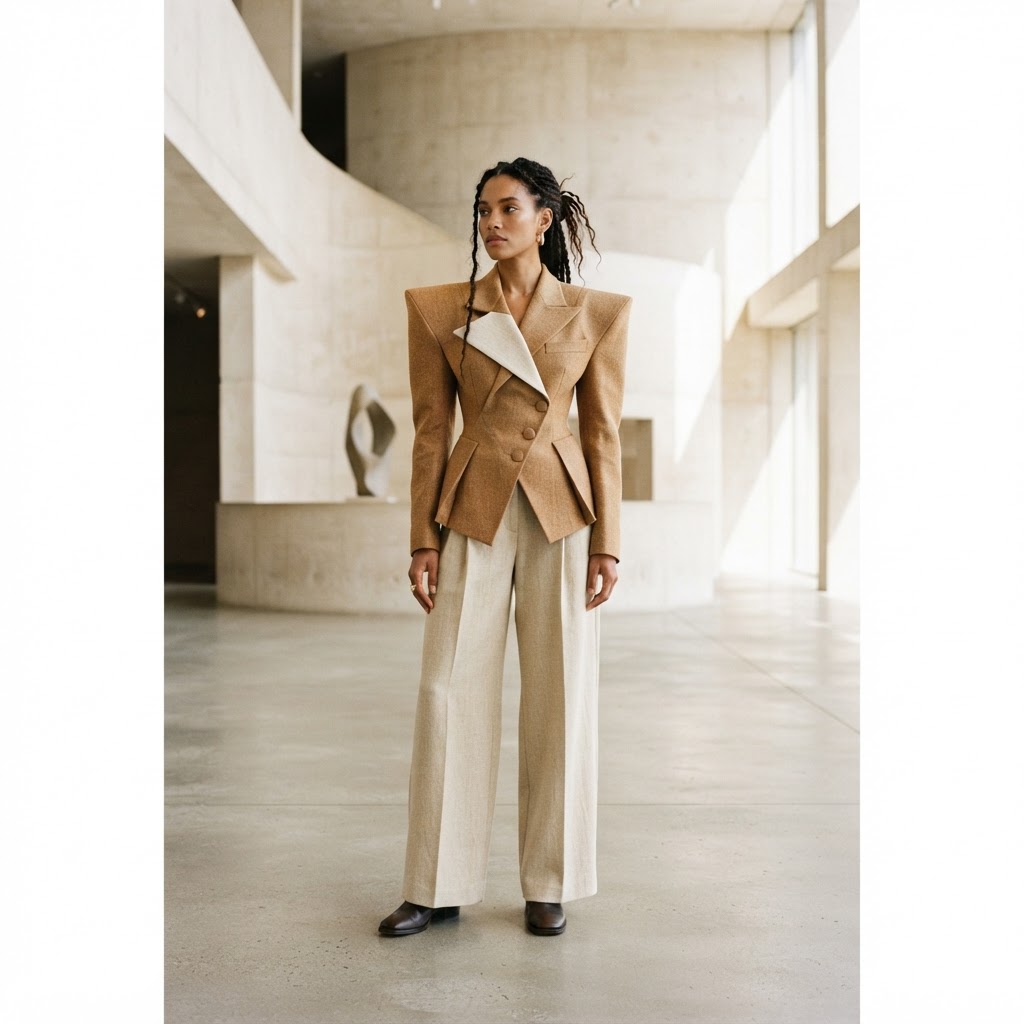
Speed is the organising principle of most of the clothing made today. A garment designed in February is cut in March, shipped in April, sold in May, and marked down in July. The infrastructure of modern fashion — its mills, its factories, its logistics — has been optimised, with extraordinary efficiency, to make this cycle possible. There is very little room, in that cycle, for the slow idea that a garment should be built to outlast the season it was made for.
Craft is the name we give to that slow idea. It is not nostalgia, and it is not a luxury. It is a set of construction decisions — how a seam is finished, how a collar is rolled, how a button is attached — that determine whether a garment can be worn for five years or for fifty.
What craft looks like, in the hand
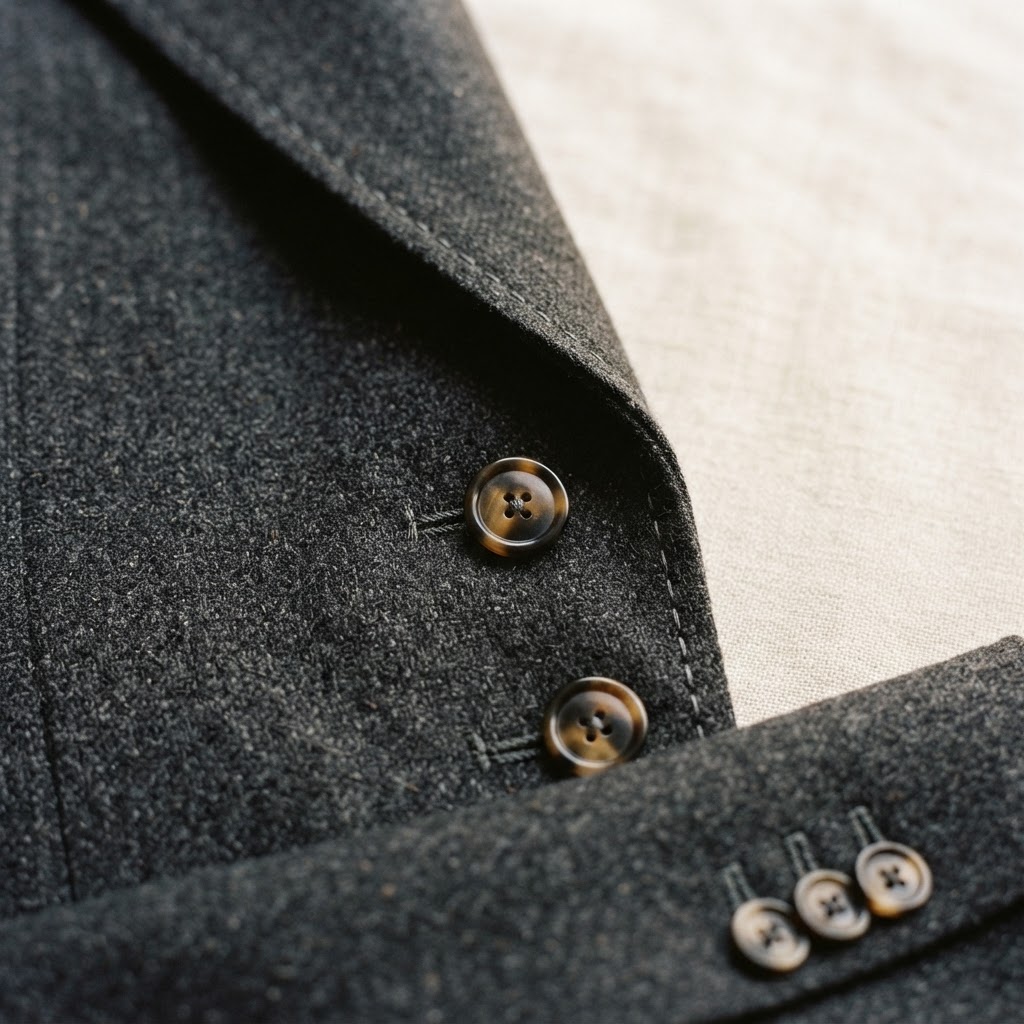
The markers of a well-made garment are not always visible, but they are consistent. A few worth knowing — all present across our men's and women's pieces:
- A fully canvassed jacket. A layer of horsehair canvas sits between the outer cloth and the lining, giving the jacket its structure without glue. A fused jacket — the modern default — uses adhesive to bond an interlining to the cloth. The canvas allows the jacket to mould to the wearer over time; the fuse does not.
- Flat-felled seams. The seam is folded over itself and sewn down twice, enclosing the raw edge. It is the seam of a good pair of jeans and a good shirt, and it is the seam that prevents unravelling.
- Natural horn or corozo buttons. A button that ages with the garment, rather than against it.
- Hand-rolled hems. The edge of a fine silk scarf or a linen pocket square is rolled by hand, not machine-stitched. The roll is softer, and the hand is visible.
None of these details is visible from across a room. All of them are felt in the hand, and all of them determine how the garment ages.
The cloth is the argument
Before construction, there is cloth. The single greatest determinant of a garment's life is the quality of the fabric it is cut from. A high-twist wool resists creasing and wears for years; a low-twist wool drapes beautifully but bags at the knee by season's end. A long-staple cotton shirts well and launders indefinitely; a short-staple one pills within a month.
The best mills — and there are fewer of them each year — weave cloth that is dense, resilient, and honest about its fibre. To buy a garment cut from such cloth is to buy the right to wear it for a long time. To buy one cut from a lesser cloth is to buy the obligation to replace it.
Why it is worth defending
Craft is not a moral position. A well-made garment is not inherently virtuous, and a quickly made one is not inherently wrong. But the slow crafts represent something the fast cycle cannot offer: the idea that an object can improve with use, that the marks of wearing can be a form of beauty, and that the relationship between a garment and its owner can be one of years rather than weeks.
At Galzeo, this is the standard we design to. Every piece we make is built to be worn, repaired, and — when the time comes — passed to the next owner, still worth wearing. Craft is the method by which we keep that promise. It is slow, it is unfashionable, and we believe it is the most important thing we do.
Further reading
- Vogue Business — how Skall Studio preserves Danish wool — craft at the mill.
- Vogue Business — the neo knitwear boom — the slow crafts, back in demand.