The capsule wardrobe was a useful idea before it became a marketing term. At its origin — Susie Faux's London boutique in the 1970s — it meant a small collection of garments designed to be mixed without thought, each piece earning its place through versatility and quality. Somewhere between then and now, it became a thirty-piece TikTok challenge. We'd like to return it to what it was.
A capsule is not a number. It is a principle: that every garment in your wardrobe should combine with every other garment without requiring a decision. When that holds, getting dressed stops being a problem to solve and becomes a pleasure to repeat.
What belongs, and what doesn't
The test for any piece in a considered wardrobe is simple: does it work with at least three other pieces you already own, and would you wear it a year from now? If the answer to either is no, it does not belong.
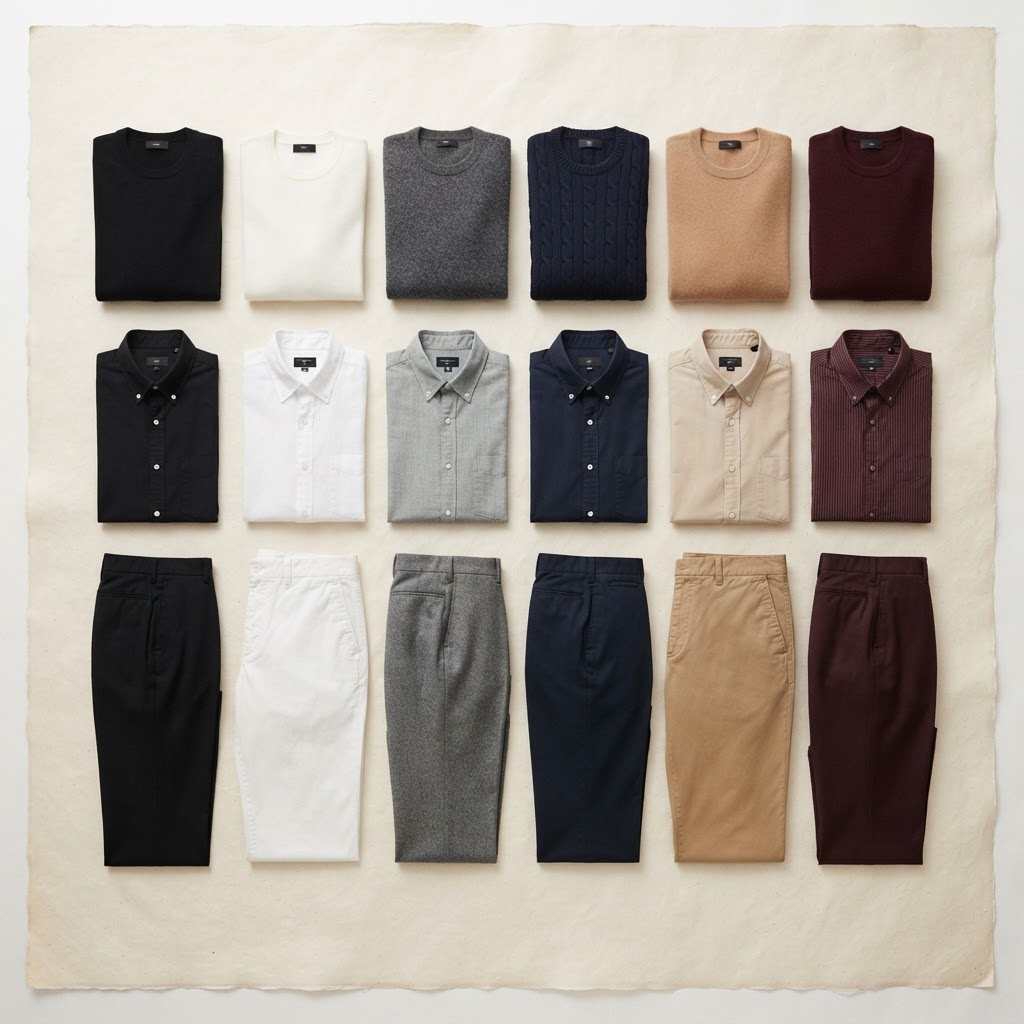
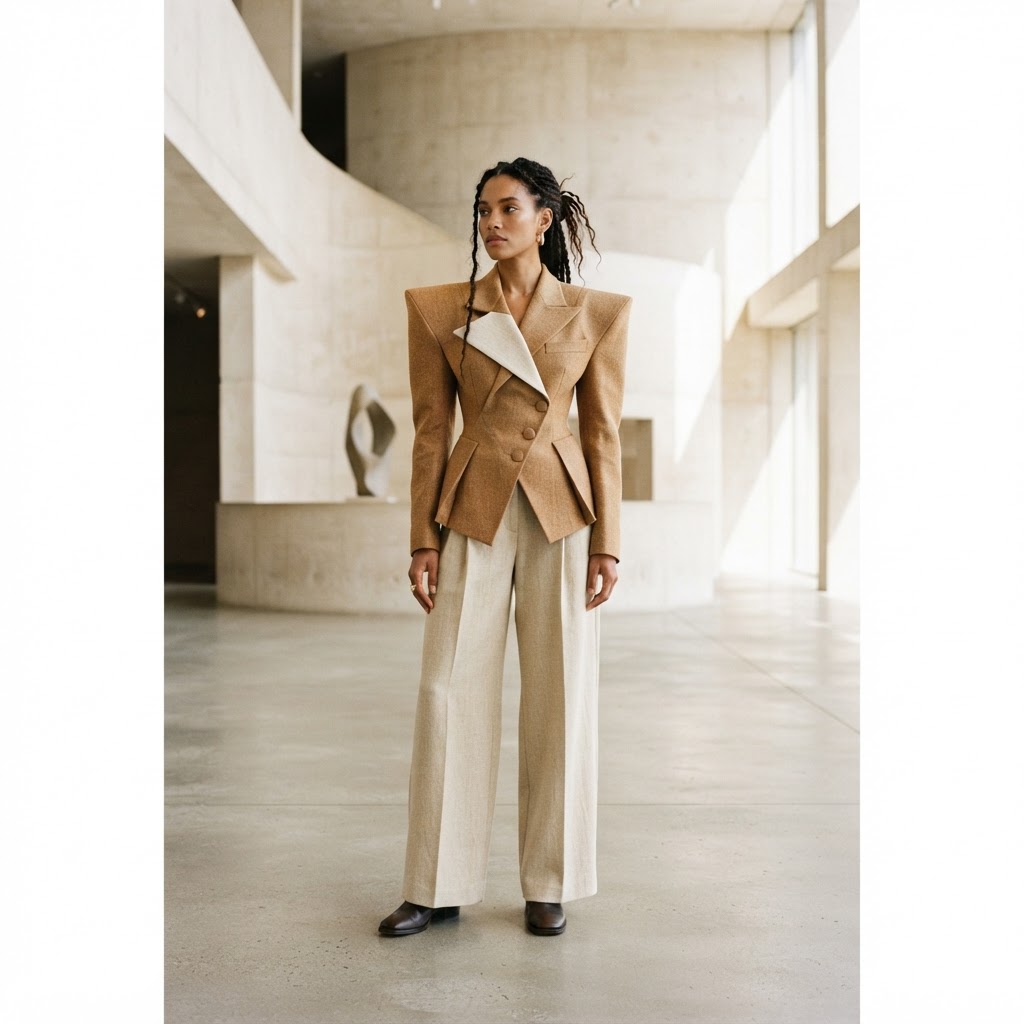
The pieces that most often survive this test share a few traits. They are neutral in colour — which does not mean beige, but rather a colour that recedes and accompanies. They are simple in line — a jacket that closes cleanly, a trouser with a straight leg, a shirt without unnecessary detail. And they are well made enough to be worn often without showing it.
A starting point
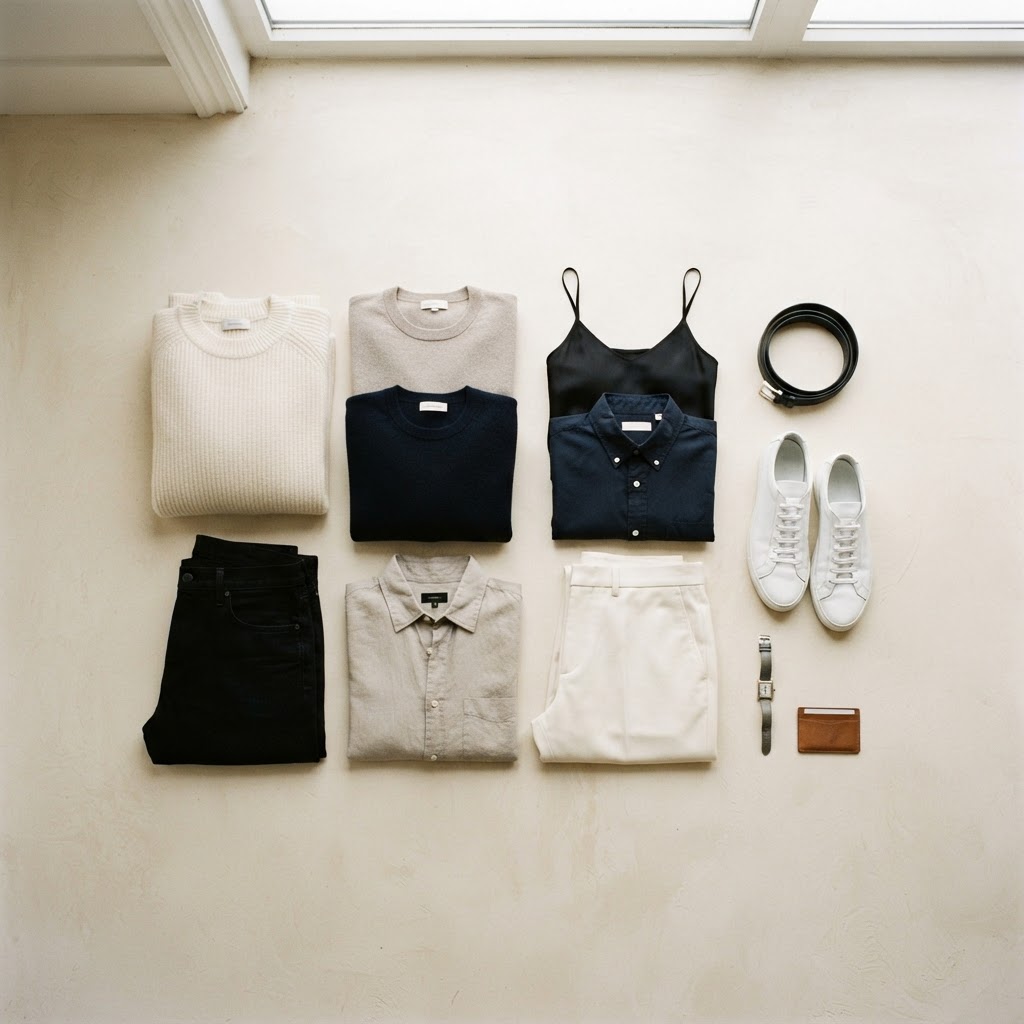
There is no universal list, but there is a shape — explore our men's and women's collections for pieces that fit it. A considered wardrobe tends to contain:
- Two outerwear pieces. One lighter, one heavier. A tailored topcoat for the cold, an unlined overshirt or mac for everything else.
- Three tailoring separates. A navy jacket, a grey trouser, and a second trouser in a different cloth — donegal, flannel, or corduroy — that broadens the range.
- Five tops. Two shirts (one white oxford, one solid), two knits (one fine, one heavy), and one jersey that works on its own or layered.
- Two pairs of shoes. One leather lace-up or loafer, one cleaner sneaker. Both in a single colour.
That is twelve pieces. From them — if each combines with at least three others — you have more outfits than a wardrobe twice the size, and none of them are compromises.
The piece you remove is as important as the one you add
A capsule is built as much by subtraction as by selection. The garments that resist combination — the patterned shirt that only goes with one trouser, the statement knit that dictates the rest of the outfit — are the ones that make a wardrobe feel full but unwearable. Removing them is not an act of minimalism for its own sake; it is the act that makes the remaining pieces usable.
Why it endures
The reason a capsule wardrobe remains relevant — through decades of trend cycles — is that it answers a problem that does not go away. Wardrobes grow, attention shrinks, and the gap between the two is where dressing becomes stressful. A considered set of pieces closes that gap. You spend less, choose better, and wear everything you own. That is not a trend. It is a discipline, and it gets easier the longer you hold it.
Further reading
- Capsule wardrobe — Wikipedia — the term's origin with Susie Faux.
- Vogue — what fashion executives are reading — on considered consumption.