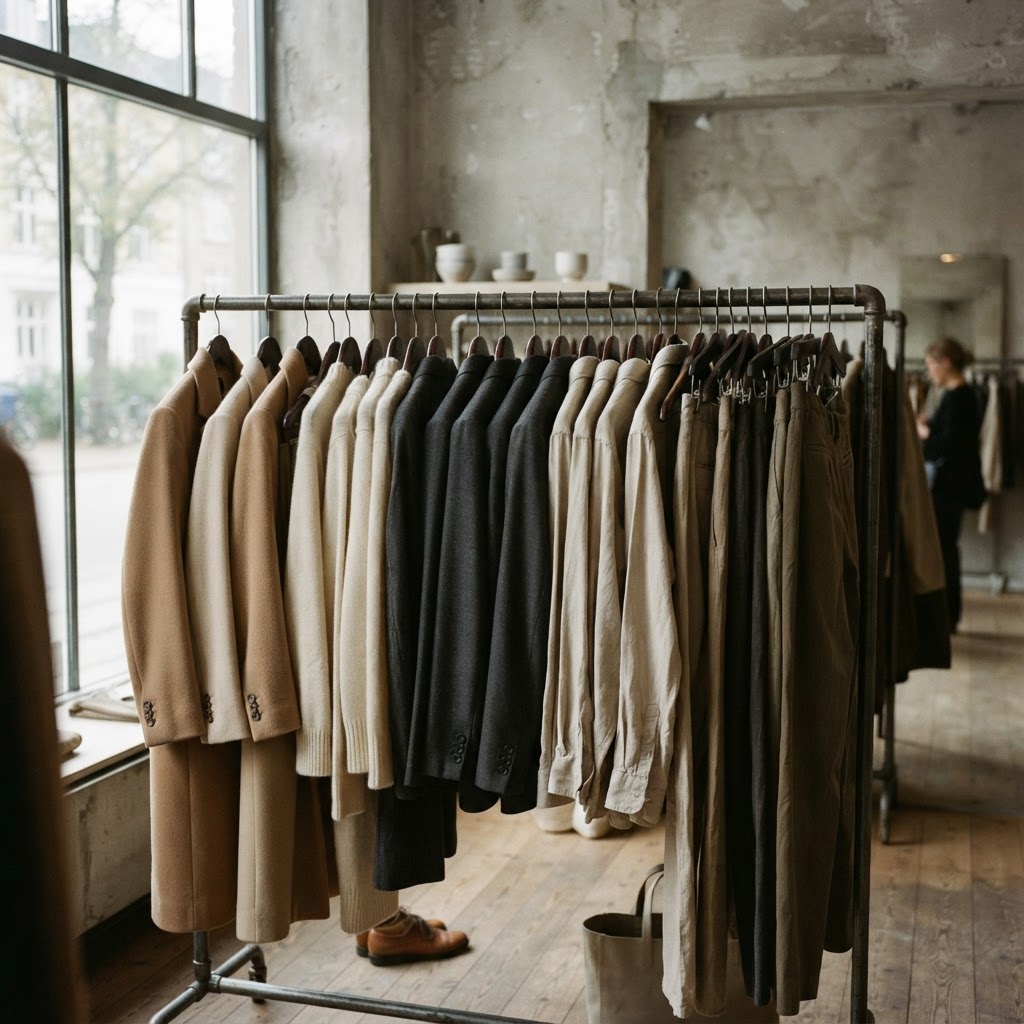
There is a particular silence to a good vintage rail. The garments hang a little looser on the hangers, the fabrics softened by a decade of washes no one can quite account for. To run a hand along a camel coat from 1996 is to feel a texture that no off-the-roll bolt of cloth quite replicates. For a long time, secondhand shopping was spoken about in apologetic terms — thrifty, niche, a little bohemian. That conversation has changed entirely.
The figures are striking. According to the ThredUp Resale Report, fifty-two per cent of consumers bought secondhand clothing in the last year, up from forty-five per cent just two years earlier. The global secondhand apparel market is projected to reach $393 billion by 2030, growing roughly twice as fast as the broader retail apparel sector. Resale now accounts for more than half of that market, having overtaken traditional donation-based thrift in both volume and value.
Why the shift happened
The drivers are not singular. Sustainability is the most often cited — a 2024 survey found that sixty-five per cent of Gen Z respondents had purchased pre-owned clothing specifically to reduce textile waste. But sustainability alone does not explain the texture of the change. There is also scarcity: the chase for deadstock denim, a particular archive Prada shirt, a colourway that never reissued. Resale is, for many, the only honest route to rarity.
Then there is economics. A well-made garment bought secondhand often costs less than a poorly made one bought new. The maths becomes difficult to argue with once you have held both.
How to shop secondhand well
The discipline of resale is closer to collecting than to browsing. A few principles help:
- Know your measurements, not your size. Vintage sizing is unreliable. Carry a tape measure and learn the shoulder, pit-to-pit and sleeve numbers that actually fit you.
- Inspect construction, not labels. A fused jacket from 2003 is not an upgrade on a fully canvassed one from 1995, regardless of the house name inside.
- Prioritise natural fibres. Wool, cotton, linen and silk age; polyester persists. The garments worth carrying home are the ones that were built to be carried home by someone else, years later.
- Buy for the gap, not for the thrill. A secondhand purchase should answer a question your wardrobe is already asking.
What it means for the way we dress
The most interesting consequence of the resale boom is not environmental or economic — it is aesthetic. A wardrobe built partly from archive and partly from new pieces is, by its nature, slower and more deliberate. It resists the seasonal rhythm that demands a reset every twelve weeks. It favours pieces with enough character to survive being photographed, posted, and re-sold.
At Galzeo, we design with this lifecycle in mind — see our men's and women's collections for pieces built to be kept and passed on. A jacket should look as considered in its third owner's wardrobe as it does on the rail in our London showroom. The rise of secondhand is, in the end, a return to the oldest idea in clothing: that a good garment is not consumed but kept, passed on, and worn again.
Further reading
- ThredUp Resale Report — the annual data behind the figures above.
- Vogue Business — resale — ongoing coverage of the resale economy.
- Ellen MacArthur Foundation — fashion and textiles — the case for a circular wardrobe.