The most difficult weather to dress for is not the coldest or the warmest — it is the in-between. A morning that begins at eight degrees, climbs to nineteen by lunch, and drops again at dusk asks more of a wardrobe than any single-temperature day. The instinct is to reach for a heavier coat and suffer through the afternoon. The better answer is to layer, and to layer with intent.
Think in weights, not in garments
A transitional wardrobe is built from three weights of cloth: a base that sits against the skin, a mid-layer that insulates, and an outer layer that protects from wind and rain. The art is choosing each so that it works alone as well as it works together.
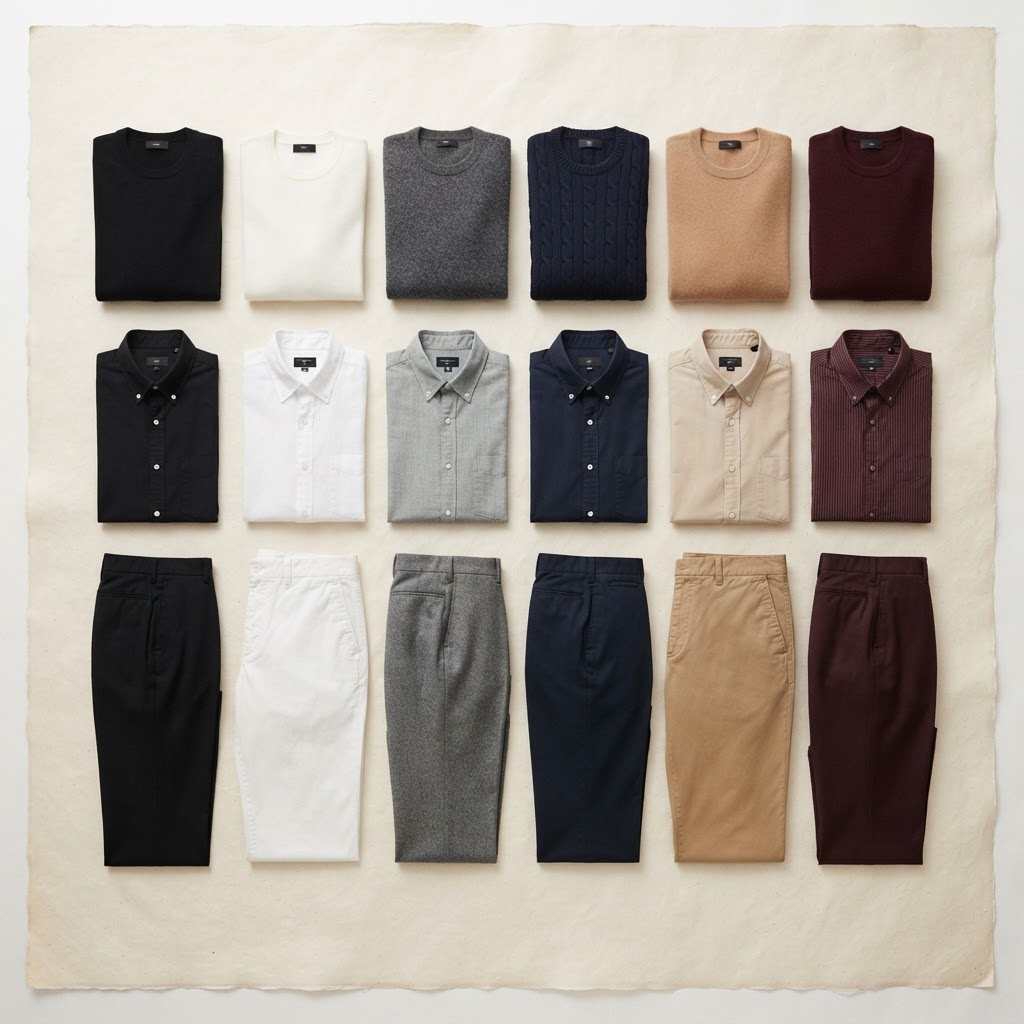
The base should be fine enough to wear indoors without thought — a lightweight merino, a cotton jersey, a smooth poplin shirt. The mid-layer should add warmth without bulk — a knit overshirt, a fine-gauge cardigan, a lightweight fleece-backed sweater — browse our men's and women's overshirts for examples. The outer layer should shield without smothering — an unlined mac, a waxed cotton jacket, an overshirt cut from a dense mills fabric.
The order matters
When the day is cool and warming, dress from the outside in: choose the outer layer first, then the mid-layer that suits it, then the base that suits both. When the day is warm and cooling, reverse it — start from the base you want against your skin, and add layers above it that you can remove in sequence without the outfit collapsing.
The goal is that no single layer is essential to the outfit's coherence. Remove the outer layer and you should still look dressed. Remove the mid-layer and the base and outer should still hold. A layered outfit is, in effect, three outfits nested inside one another.
A worked example
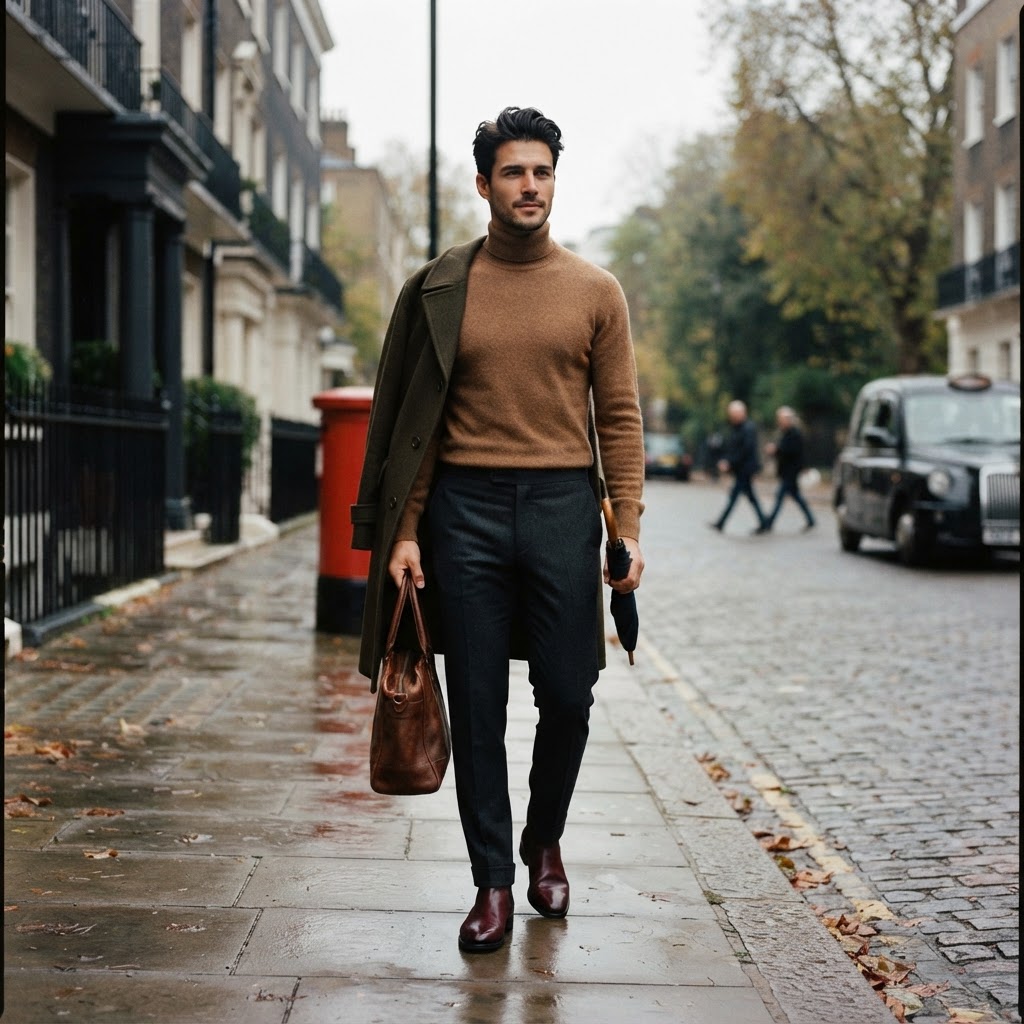
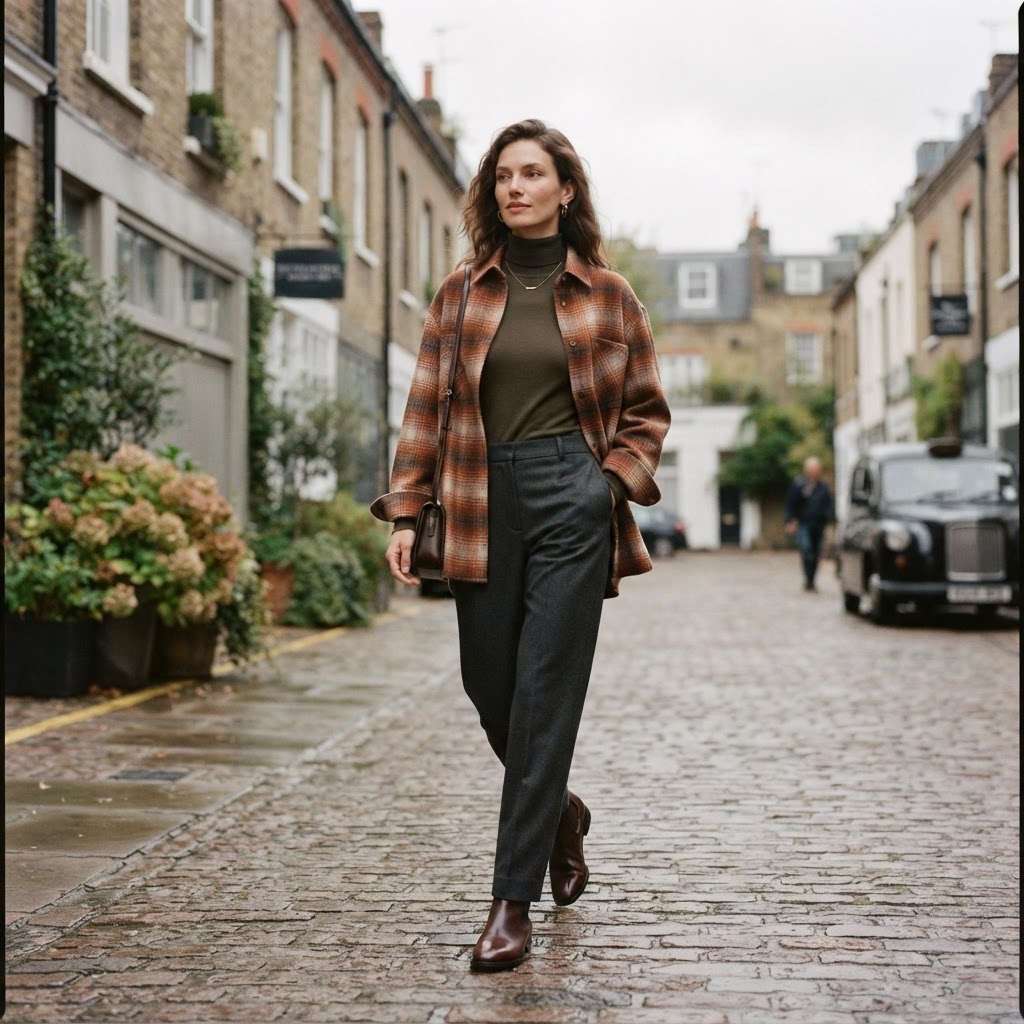
Consider a London day in late September. Begin with a fine merino crewneck in stone. Over it, a lightweight knit overshirt in a darker neutral — navy or olive — that can be worn open or closed. Over that, an unlined cotton mac in a third, quieter tone. Three layers, three weights, each removable. By midday the mac comes off; by afternoon the overshirt; by evening all three are back on, and the outfit has looked intentional at every stage.
The fabric question
Transitional layers live or die by their cloth. Avoid anything that traps heat unevenly — heavy synthetics, thick fleeces, dense double-faced wools. Look instead for breathable natural fibres and, where you need insulation, for weaves that allow air to move: loose knits, open weaves, unlined constructions. The piece should warm you when you are still and cool you when you move.
Transitional dressing is, ultimately, about paying attention — to the day, to the cloth, and to the fact that comfort and a clean silhouette are not in conflict. Done well, the layered outfit is the most considered one in a wardrobe, because it has been thought about from the skin out.
Further reading
- Vogue Business — inside the neo knitwear boom — the mid-layer's moment.
- Vogue Business — how Skall Studio preserves Danish wool — natural-fibre layering, from a mill's view.