There is a piece of arithmetic that, once learned, is difficult to unlearn: cost-per-wear. A coat that costs four hundred pounds and is worn a hundred times costs four pounds an outing; a coat that costs a hundred and is worn five times costs twenty. The cheaper coat costs more. The maths is simple; the habit it demands is harder.
The case for the better piece
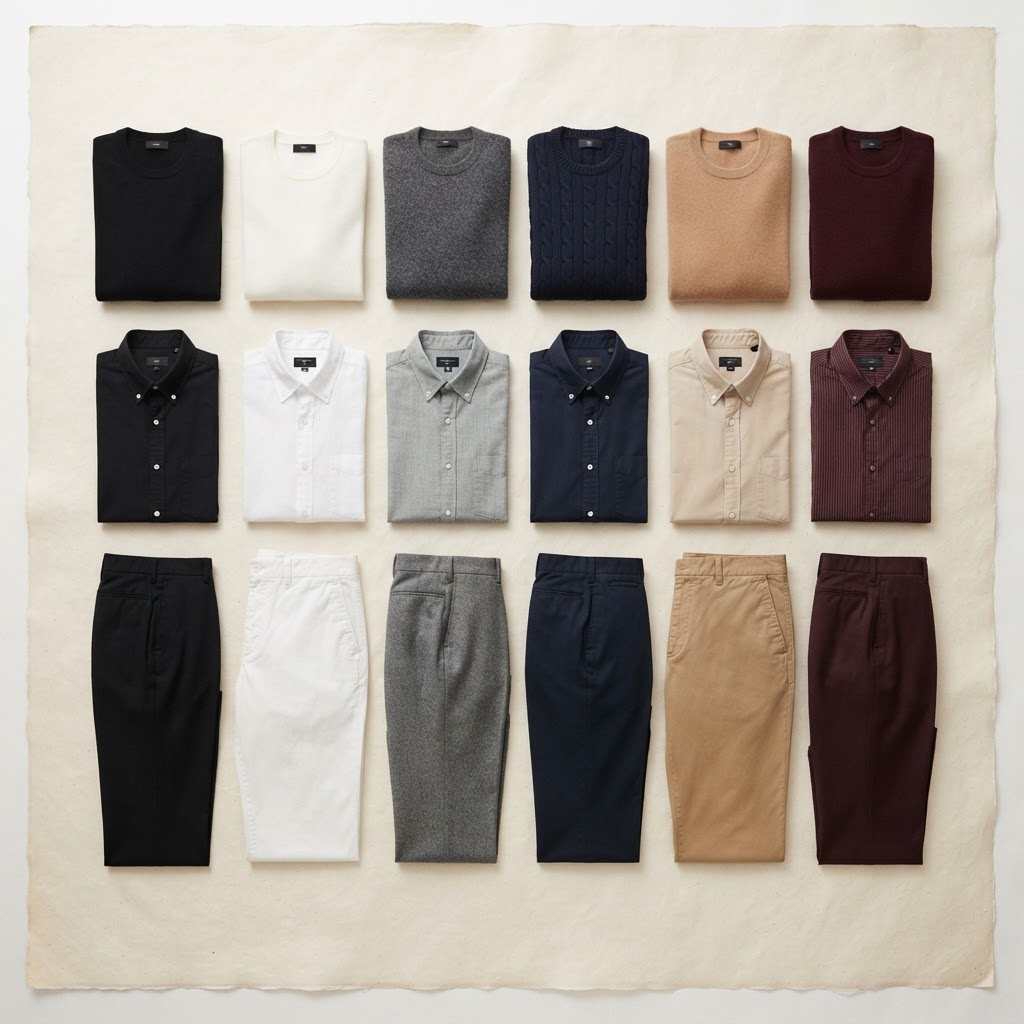
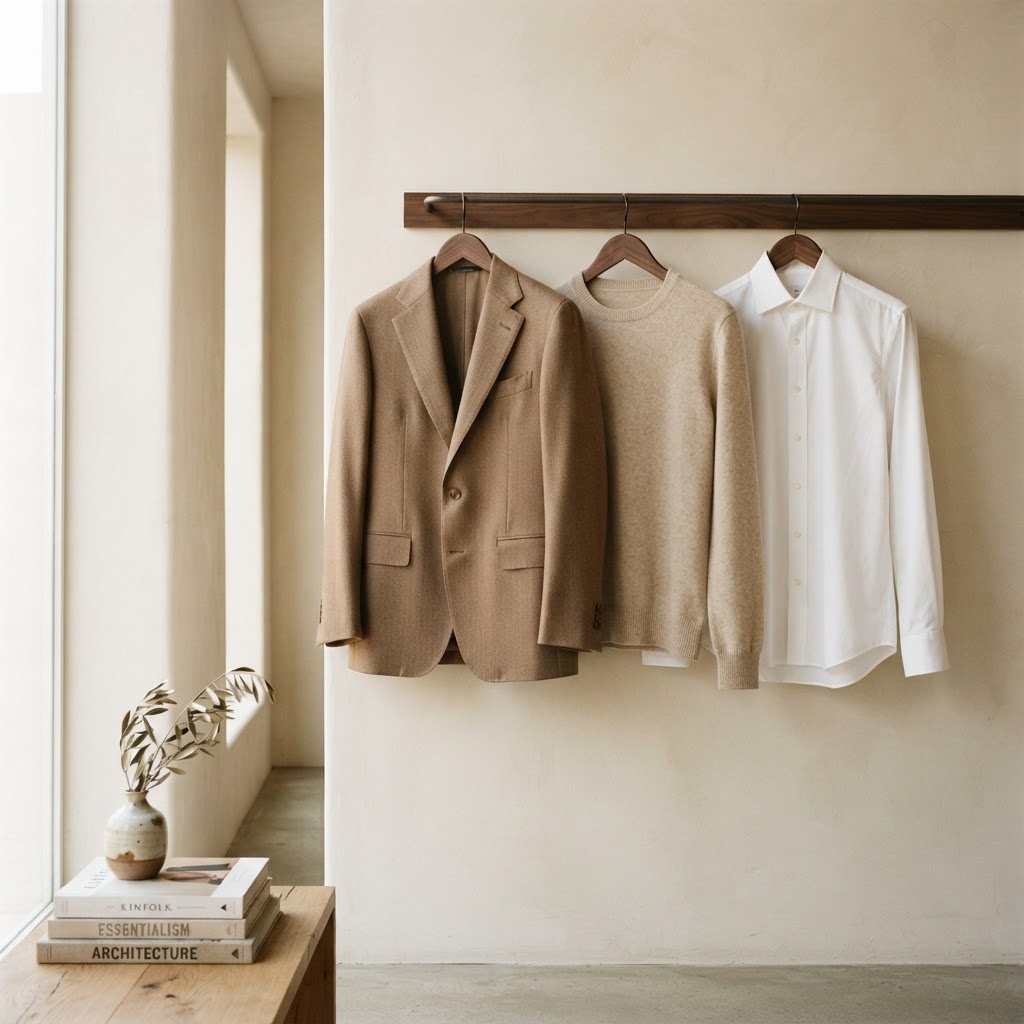
The argument for buying less and buying better is not a moral one — it is an economic and aesthetic one. A well-made garment, kept, costs less over its life than a cheap one replaced, and looks better doing it. The capsule wardrobe is the wardrobe that follows from that arithmetic: fewer pieces, each earning its place. See our men's and women's collections for pieces built on the logic.
How to put it into practice
- Apply the three-test. Does it work with three pieces you own? Would you wear it in a year? If not, it does not belong.
- Spend where it shows. Outerwear and shoes age visibly; spend there. Underwear and basics, less so.
- Subtract before you add. A wardrobe improves as much by removal as by purchase.
Why it endures
The buy-less-better idea survives every trend cycle because it answers a problem that does not go away: wardrobes grow, attention shrinks, and the gap is where dressing becomes stressful. The discipline closes the gap. It is the same idea behind the resale reflex and the craft argument — only the angle is different.
Further reading
- Vogue — what fashion executives are reading — on considered consumption.
- Capsule wardrobe — Wikipedia — the wardrobe that follows from the maths.